
Market developments
The Dutch housing market continued its recovery throughout 2025, supported by improving macroeconomic conditions and gradually strengthening sentiment in both the owner-occupied and rental segments. On the consumer side, demand remained strong across all price categories, while the investment market showed increasing activity compared to previous years, albeit still below pre‑2022 levels. This stabilisation was underpinned by moderating inflation, a gradual decline in mortgage interest rates from their earlier peaks, and further increases in household incomes. As a result, market rents and owner-occupied house prices rose again, reflecting renewed dynamics after a temporary slowdown earlier in the year. At the same time, the ongoing imbalance between supply and demand remained the dominant structural challenge within the Dutch housing market, as housing production continued to lag behind demographic growth and ongoing household formation.
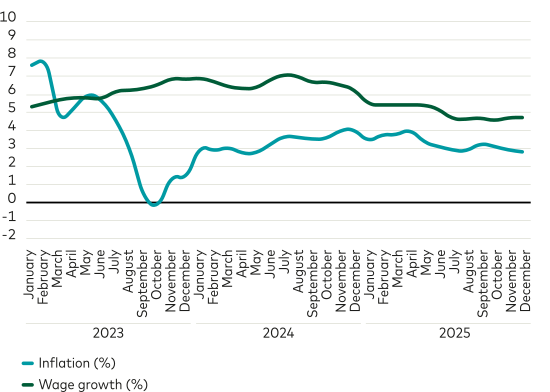
Inflation 2023-2025 (CPI) and wage growth (CAO)
Source: Statistics Netherlands
Inflation in the Netherlands stabilised in 2025, with consumer prices rising by 3.3% on average compared to the previous year. However, the inflation remained above the European Central Bank’s medium‑term target of 2%. According to Statistics Netherlands (CBS), housing costs made the largest contribution to overall price growth in 2025.
Wage growth in the Netherlands remained strong in 2025, with negotiated wages rising by 5% compared to the previous year. This marks the third consecutive year of robust wage increases and reflects the persistent tightness of the Dutch labour market. Higher wage levels supported household purchasing power and contributed to overall economic activity. At the same time, rising labour costs were one of the factors influencing broader price developments across the economy.
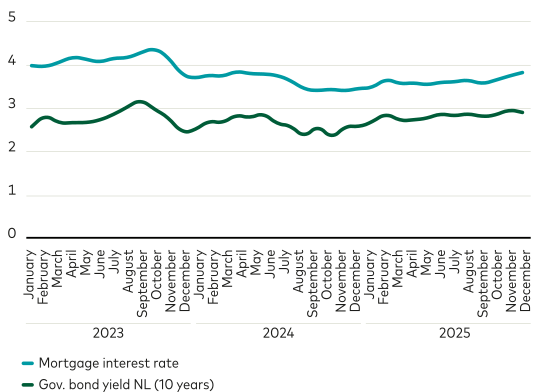
Mortgage rates in the Netherlands remained broadly stable in 2025, with only limited movements compared to the year before, and ended up at 3.83%. After gradually easing during 2024, rates hovered around a similar level throughout the year, showing small month‑to‑month fluctuations but no major shifts. This overall stability in financing costs, combined with rising household incomes, helped support purchasing power in the owner‑occupied market and contributed to renewed upward momentum in house prices.
Mortgage interest rate vs government bond yield NL (10 years)
Source: IEX, BLG wonen
In 2025, the average transaction price of existing owner‑occupied homes increased to approximately €456,000, marking a continuation of the upward trend seen over the past two years. Although prices increased at a more moderate pace as the year advanced, transaction levels remained higher than in 2024. Overall, the owner‑occupied market maintained a clear upward trend in 2025, supported by strong demand and a persistent shortage of available homes (source: Statistics Netherlands).
In the residential investment market, activity strengthened in 2025, with domestic investors accounting for nearly all transactions as foreign capital remained largely absent due to regulatory uncertainty and changing tax measures. Total investment volume in residential real estate reached €9.7 billion (source: Capital Value). A substantial share of transactions resulted from the continued sale of rental properties, supported by a wide pricing gap between block sales and privatisations. This dynamic pushed investor activity, particularly in student cities, even while the overall rental stock continued to decline due to increasing sales to private owner‑occupiers. (source: CBRE)
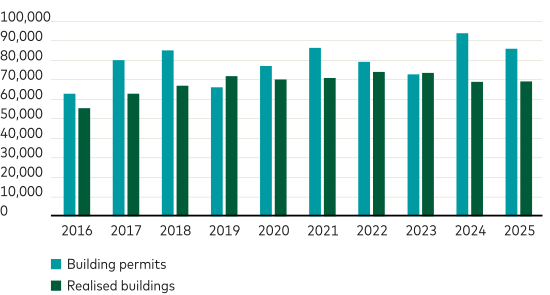
The housing shortage continues to intensify as the number of newly added homes declined for the third consecutive year. In 2025, nearly 80,000 dwellings were added to the housing stock through new construction and other additions, a decrease compared to previous years, while building permits for almost 86,000 new homes were issued, down from nearly 94,000 in 2024. Despite these permits, the pace of actual construction remains slow, with 69,000 new-build homes completed and a further 10,700 added through conversions or other adjustments. At the same time, 9,500 homes were demolished, resulting in a net increase of only 70,000 homes. The persistent gap between permits and completions indicates that future supply will continue to lag behind demand, suggesting that the housing shortage is unlikely to ease in the near term. (source: Statistics Netherlands)
Building permits vs realised buildings 2016-2025[1]
Source: Statistics Netherlands, Capital Value
Vesteda Housing Market Indicator
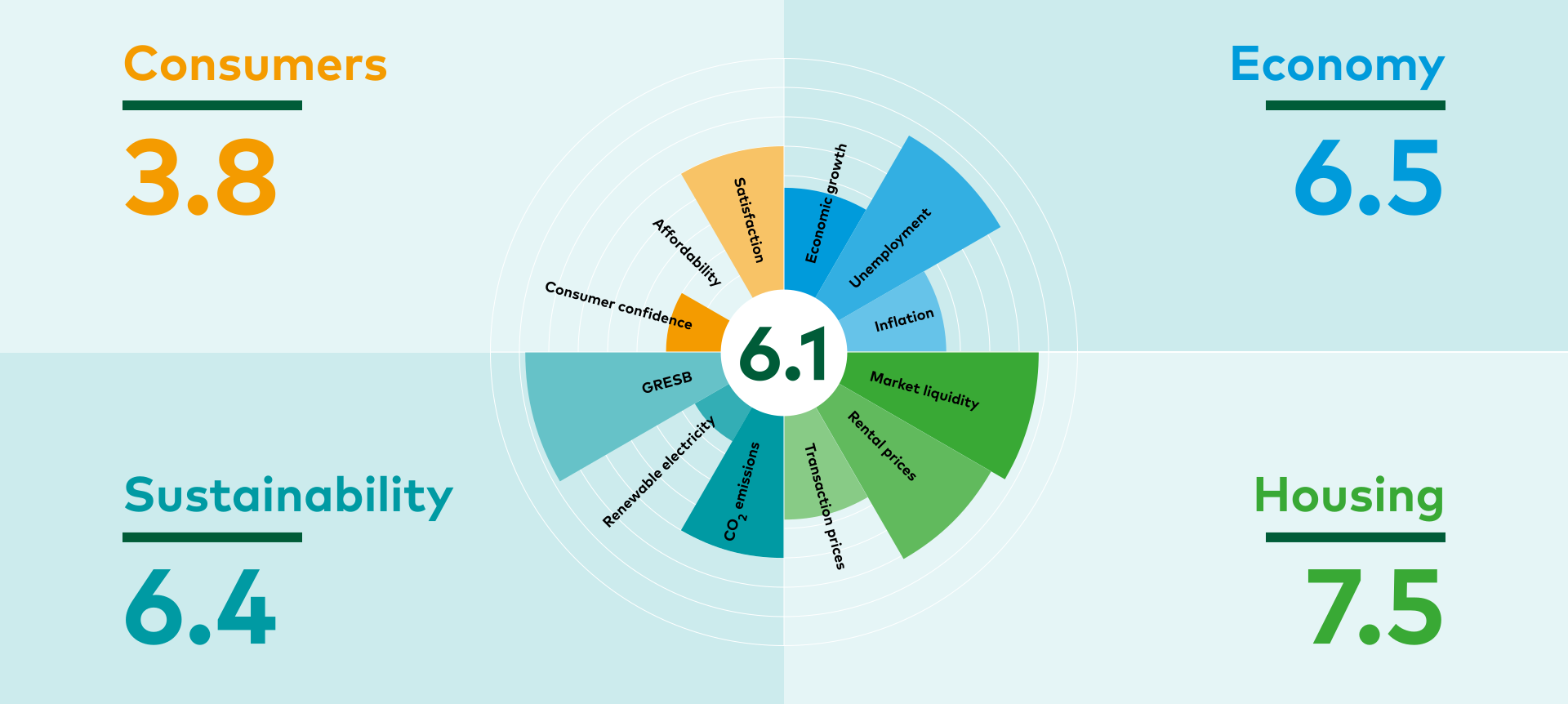
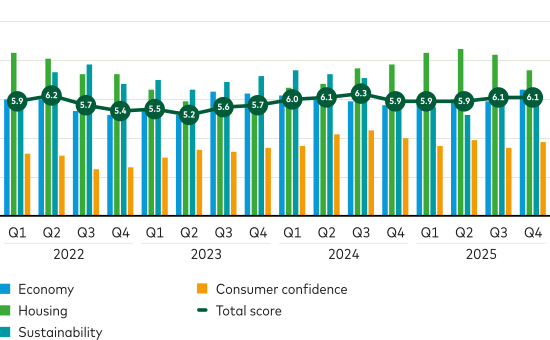
The trends described above are also reflected in Vesteda’s Housing Market Indicator (HMI). The HMI summarises key developments in the Dutch housing market from a residential investor’s perspective. In 2025, the HMI remained relatively stable, with scores of 5.9 in the first two quarters and a modest increase to 6.1 in the third and fourth quarters.
Underlying quadrant developments were mixed. The housing quadrant remained elevated for most of the year, supported by rising rental and transaction prices, although growth moderated towards year-end. Affordability continued to weigh on the consumer quadrant, while economic conditions improved gradually, particularly in the final quarter. Sustainability scores fluctuated more noticeably, with a decline early in the year followed by a marked improvement driven by lower CO₂ emissions and higher renewable energy production.
Overall, the HMI for 2025 indicates a market that is steady at headline level but features varied and sometimes contrasting developments across its underlying components. These differences underline the complexity of current market conditions and the interplay between economic, consumer, housing, and sustainability factors.
Vesteda Housing Market Indicator, actual as per Q4 2025
Source: Vesteda
Vesteda Housing Market Indicator, Q1 2022 - Q4 2025
Source: Vesteda
Political developments
In 2025, Dutch housing policy was significantly shaped by political uncertainty. The national government fell on 3 June 2025, after which a prolonged caretaker period limited the progress of new legislation. Elections for the House of Representatives were held on 29 October 2025, and by year‑end the formation of a new cabinet was still ongoing. This prolonged political transition slowed the advancement of several policy initiatives and left the future direction of housing policy uncertain.
During this period, the Affordable Rent Act again became a topic of political debate, with policymakers exploring potential adjustments aimed at improving the overall investment climate. These discussions focused on possible relaxations intended to make residential development and long‑term capital allocation more viable again, rather than further expanding rent regulation. Although several options were examined, both the scope and timing of any amendments remained uncertain throughout 2025. Vesteda supports refinements that contribute to a balanced and workable regulatory framework that enables continued investment in rental housing. At the same time, regulation does not resolve the structural challenges in the Dutch housing market. Vesteda therefore remains committed to investing in affordable and sustainable homes for middle‑income households, strengthened by appropriate housing allocation as part of a long‑term approach to improving the availability of affordable housing.