
Climate Change
GOV-3 Integration of sustainability-related performance in incentive schemes
Please see the description of our sustainability-related performance in incentive schemes in section GOV-3 - Integration of sustainability-related performance in incentive
schemes.
SBM-3 – Material Impacts, risks and opportunities and their interaction with the strategy and business model
Business resilience analysis
Vesteda's Climate and Environment Policy outlines the company's commitment to integrating climate and environmental sustainability into all aspects of its business. This policy aims to minimise environmental impact, enhance energy efficiency, conserve natural resources, and contribute to climate change mitigation.
We performed both a physical climate risk assessment and a transition climate risk assessment. This business resilience analysis is performed on Vesteda’s entire value chain. The climate risk assessment is performed on our entire real estate portfolio, hence on the downstream of the value chain. The transition risk assessment encompasses Vesteda’s entire value chain and was performed for the first time in FY25.
For more information on the scenarios and time horizons, see the next section on the description of processes to assess material climate-related impacts, risks and opportunities.
The financial implications of climate-related risks are integrated into Vesteda's financial planning and reporting processes. Strategic budgets have been allocated to address risks related to climate change mitigation, adaptation, and physical climate risks. Increased expenditures due to heat stress and potential devaluation of assets in flood-prone areas are factored into long-term strategy and budgeting processes. Furthermore, investment decisions are based on the assigned Sustainability Impact Score (SIS), which takes into account the climate risks of potential real estate investments. Vesteda has implemented the Sustainability Impact Scores on our residential properties; the scoring is reviewed and updated on a three-year basis to ensure that climate risks are continuously monitored and managed.
IRO-1 - Description of the processes to identify and assess material climate-related impacts, risks and opportunities
The starting point of the IROs related to Climate change mitigation includes Vesteda’s entire value chain. The process of identifying and assessing climate change mitigation-related IROs related to GHG emissions finds its origin in the energy usage within each scope. See the section Materiality analysis and results according to the concept of double materiality for a detailed description of our DMA process. Vesteda conducts a thorough analysis of our Scope 1 and 2 emissions, as well as Scope 3 emission categories deemed material through our screening process. We are committed to aligning and updating our CO2 roadmap according to the guidelines set by the GHG Protocol.
Physical climate risk assessment
Physical climate change risks are evident for our real estate portfolio due to the more extreme weather conditions in the Netherlands. Therefore, we perform this physical climate risk assessment on our entire real estate portfolio. This assessment is primarily focussed on the risk of substantial damage to buildings in our portfolio due to extreme weather conditions, such as heat stress, flooding, and drought, in addition to health problems for our tenants due to excessive heat.
The assessment finds its origin in 2019, when we began with the identification and assessment of risks related to climate change adaptation, which was performed in collaboration with Climate Adaptation Services (CAS). To identify relevant climate risks for Vesteda’s portfolio, we focused on four key themes: waterlogging, flooding, heat stress, and drought. These themes align with those outlined in the Delta Program for Spatial Adaptation. For each theme, the potential impacts on Vesteda’s portfolio were analysed using a structured method called impact chains. To define the physical climate risks relevant to Vesteda, we used a framework based on the Fifth Assessment Report (AR5) published by the IPCC (2014). This analysis led to the development of the Climate Identification & Management (KIM) tool. This tool enables us to scan our entire real estate portfolio for climate hazards, allowing us to proactively analyse and assess the physical climate risks identified. The KIM tool provides a risk score for each real estate asset, ranging from no risk (where no mitigation is required) to very high risk (where immediate action is needed). This ensures climate resilience across Vesteda’s assets, facilitating effective risk management and strategic planning for climate adaptation. As a result, we identified the following six material sub-risks. These six risks were refined and eventually validated through latest available expert consultation with Vesteda colleagues. These six sub-risks are critical for the resilience of our real estate portfolio:
-
Flooding after a dike breach;
-
Falling groundwater levels/Pole rot;
-
Wildfires;
-
Rising groundwater;
-
Water nuisance during short, intense showers;
-
Heat stress.
The assessment of the six identified risks using the KIM-tool is based on a stress test analysis, which evaluates the 2050 WH scenario from KNMI’14 for each risk[1]. These analyses account for both the surrounding area and property-specific characteristics. See the figure Climate risks and impact on Vesteda’s portfolio 2025 for a visual representation of the outcome of Vesteda’s physical climate risk assessment.
CAS derives its data from the Climate Impact Atlas to assess the physical climate risks of our real estate portfolio. The Climate Impact Atlas aligns with the KNMI'14 scenarios. This assessment focuses on both the current situation and the worst-case scenario projected for 2050, as experts consider this the most realistic outlook. Therefore, including less severe scenarios would not add meaningful value to our analysis. As new data and maps become available, we incorporate these updates to ensure the accuracy and relevance of our information. The expected lifetime of Vesteda’s residential properties naturally aligns with the 2050 climate scenario, supporting our long-term acquisition vision. This alignment reinforces our acquisition strategy, which prioritises properties with high energy efficiency. We pursue this through targeted acquisitions and renovations that enhance the sustainability and resilience of our portfolio. This approach reflects the forward-looking disclosure principles outlined in IFRS S1 and IFRS S2, including scenario analysis and transition planning. By integrating climate-related considerations into our investment decisions, we demonstrate our commitment to managing long-term sustainability risks and opportunities.
Recent analyses have shown that residential units with a higher level of energy efficiency have significantly lower energy costs compared to less sustainable homes within Vesteda’s portfolio. These lower energy expenses translate into reduced total housing costs for tenants, thereby improving affordability and enhancing overall living comfort. Through targeted renovations, Vesteda leverages this opportunity to create shared value by combining environmental benefits with positive social and economic outcomes for its tenants.
Vesteda’s structured and data‑driven approach to climate risk management and greenhouse gas (GHG) accounting enhances transparency, supports informed decision‑making and strengthens credibility with investors and other stakeholders. As regulatory expectations and stakeholder demands continue to increase, Vesteda’s ability to demonstrate robust climate insights and forward-looking risk management creates a competitive advantage and supports its ambition to lead the sector in sustainable real estate investment. Physical climate risks are also a recurring topic when reviewing our insurance programme. Over the past few years, we have identified physical climate change risks in the portfolio and explored these in more detail by including building specifications in the scores relevant for heat stress and flooding due to heavy rainfall. By the end of 2025, Vesteda had mitigated the higher risks or made plans to address the elevated risks in a mitigation plan per asset.
Climate transition risk assessment
While we have focused primarily on physical climate risks and their impact on our portfolio, we have extended our scope to include transition risks. This transition risk assessment was performed in FY25 as an extension of our current physical risk assessment. This involves scenario analyses aligned with the 1.5°C pathway and other relevant climate scenarios to better understand the potential impacts of the transition to a low-carbon economy on our operations and portfolio. The assessment evaluates the likelihood and exposure of each short-listed transition risk materialising in the short, medium, long, and very long term, based on the International Energy Agency's (IEA) Net Zero Emission by 2050 scenario and the corresponding critical assumptions by the IEA. The short-term likelihood rating covers a period of less than one year, corresponding to the scenario narrative for 2026. The medium-term rating spans 2-5 years, covering the scenario narrative for 2027-2030. The long-term rating encompasses 5-10 years, corresponding to the scenario narrative for 2031-2035. The very long-term rating covers periods greater than 10 years, corresponding to the scenario narrative for 2036-2050. Short-term assessments help us respond to immediate regulatory and market changes, medium and long-term horizons allow us to plan for evolving technological and economic factors, and the very long-term perspective ensures alignment with strategic goals and pending global shifts.
We conducted the first transition risk assessment in FY25 and we will update this frequently based on revised scenarios by the IEA. The transition risk assessment covers Vesteda's entire value chain, as mapped during the DMA. Under the transition risk scenario, scores are assigned on a scale of 1-5 across various categories[1], including regulatory changes, technological advancements, reputational impact, and shifts in market dynamics. These risks arise from the shift to a low-carbon economy and can impact the company’s operations, financial performance, and reputation. The transition risks were identified by evaluating Vesteda's value chain alongside the transition risks defined for similar companies in the construction and real estate sector. Additionally, Vesteda aims to transition to a gas-free real estate portfolio in the future, as outlined in our transition plan.
The material transition risks we identified are:
-
Pricing GHG emissions: high carbon prices can translate to higher energy costs;
-
Transition to lower emission sources and activities: energy efficiency policies related to operations and assets such as buildings could require to Vesteda to make investments to comply;
-
Investments in new technologies: the necessity for investment in new technologies to support our low-carbon objectives;
-
Pricing production process: changes in the pricing of production processes, reflecting the costs and benefits of a low-carbon economy.
E1-1 - Transition plan for climate change mitigation
In our Climate & Environment policy, we have set reduction targets as part of our sustainability strategy. These targets align with keeping global warming within the 1.5°C limit set by the Paris Agreement. The key climate change targets are listed below.
-
Reduction of energy consumption to 86 kWh/m2 by 2030, indicating a 60% reduction in CO2eq emissions by 2030 compared to 1990 levels[1];
-
Reduction of CO2eq by 95% in 2045 compared to 1990 levels;
-
Exclude gas use by upgrading our buildings. Specific targets and timelines for this goal are currently under development.
Vesteda focuses on reducing energy intensity, measured in kWh per square metre (kWh/sqm), to meet our CO2eq reduction goals. This strategy allows for accurate monitoring by bypassing the fluctuations and complexities related to emission conversion factors. According to the ESRS, this approach is considered an entity-specific reduction target. By setting targets in kWh, Vesteda achieves consistency, eliminates the need for annual emissions factor adjustments, and streamlines long-term planning. Focusing on energy usage ensures tangible sustainability improvements rather than reduction in CO2eq emissions. Using CO2eq targets can limit control over energy efficiency improvements, as they are typically location-based. Consequently, if the energy grid becomes greener, Vesteda's performance appears to improve, whereas a less green grid has a negative impact on reported outcomes. Additionally, Vesteda is also further exploring emissions from material processing to devise more specific strategies for emission reductions.
By prioritising energy intensity, Vesteda's approach aligns with its operational realities, promotes effective energy management, and demonstrates genuine improvements in energy performance, underscoring our commitment to sustainability.
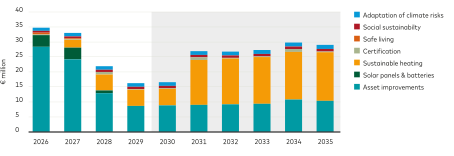
To achieve the highlighted targets Vesteda identified a number of decarbonisation levers to achieve its GHG emission reduction targets. These decarbonisation levers are assessed as our key action plans, which are listed in section E1-3 Actions and resources in relation to climate change policies. These action plans are incorporated in our 2026-2030 Business Plan, which is formally approved by our Participants. We have a total budget of €263 million available for the period to 2035. For the measures contributing to the 2030 target, we have a total budget of €124 million available. Please see the following figure for a visual presentation of the planned investments in sustainability-related topics, based on Vesteda’s 2026-2030 Business Plan.
Our transition plan has been approved by the Management Board, Supervisory Committee and Participants. We expect our transition to a sustainable economy to evolve over time as we continuously improve our sustainability practices and integrate new technologies.
Vesteda is not excluded from the EU Paris-aligned Benchmarks. This accords with the exclusion criteria set out in Articles 12.1 (d) to (g) and 12.2 of Commission Delegated Regulation (EU) 2020/1818 (Climate Benchmark Standards Regulation).
Sustainability investments 2026-2035 (based on Vesteda’s Business Plan 2026-2030)
-
Asset improvements: implementing measures at relatively high energy consumers, and extra emphasis will be placed on insulation during scheduled maintenance;
-
Certification: recertification of the portfolio (BREEAM);
-
Adaptation of Climate risks: implementing measures to mitigate physical climate risks (e.g. heat stress and flooding);
-
Solar Panels & Batteries: installing solar panels and conducting pilots related to the installation of home batteries;
-
Safe living: asset mitigation measures to improve safety (e.g. replacement of single layer windows, placement of emergency staircase);
-
Sustainability heating: between 2027–2030, we will conduct pilots with sustainable heating solutions (individual/collective heat pumps, district heating); from 2031, phased scaling will follow at natural replacement moments;
-
Social sustainability: promoting energy savings among tenants (e.g., through digital energy coaches, communication campaigns).
E1-2 - Policies related to climate change mitigation and adaptation
Vesteda’s Climate and Environment (C&E) policy outlines how the company integrates its strategy with key environmental topics, setting specific targets and actions to address the material IROs on climate mitigation, climate adaptation and energy. It focuses on integrating climate and environmental sustainability in the business. The policy defines targets and actions for climate mitigation and adaptation by enhancing energy efficiency and deploying renewable energy by installing solar panels and transitioning to gas-free solutions. The most senior level accountable for the implementation of the policy is the Management Board, which ensures alignment with Vesteda's core values of integrity, safety, and sustainability. Day-to-day implementation is conducted by various departments, such as Portfolio Strategy and the Investment Manager ESG. The Management Board is responsible for overseeing the implementation. The targets and actions align with the goals established in the Paris Agreement.
Additionally, Vesteda employs an ESG risk framework to determine the scope of relevant sustainability risks and factors on our residential properties. Consequently, a scoring is assigned to each project based on various indicators. The weighted average of this score results in a Sustainability Impact Score (SIS) for the project. This is detailed in the Policy on the Integration of Sustainability Risks and Factors in the Investment Decision-Making Process. This policy outlines Vesteda's approach to incorporating sustainability risks and factors in its investment decisions. It focuses on improving the quality and sustainability of Vesteda's portfolio, particularly in the mid-rental segment. The policy covers Article 3 of the Sustainable Finance Disclosure Regulation (SFDR), which Vesteda is obliged to publish on its website. The Management Board is responsible for overseeing the implementation and ensuring alignment with Vesteda's core values and sustainability commitments. These policies apply to all activities of Vesteda Investment Management B.V. and the Vesteda Residential Fund it manages.
E1-3 - Actions and resources in relation to climate change policies
Collaboration with clients and business partners is essential to the successful implementation of Vesteda's transition plan and can be considered a key driver in the implementation of actions for all decarbonisation levers and the subject matter of the remaining environmental sections. Our stakeholders—including tenants, subcontractors, and suppliers—are crucial to implementing sustainability measures in our projects. We monitor the actual energy consumption of our homes with full coverage of the total portfolio, including tenant consumption. We can use this relatively unique data to determine and monitor our goals.
The figure Sustainability investments 2026-2035 shown in section E1-1 Transition plan for climate change mitigation presents the planned investments for the coming years in order to achieve our targeted CO2/m2 savings according to our transition plan. These investments simultaneously contribute to achieving our sustainability goals, as well as adding quality to our homes, and lead to long term MSCI outperformance, improved tenant satisfaction and the mitigation of potential regulatory risks.
To achieve our GHG emission reduction targets throughout our entire value chain, Vesteda identified the following decarbonisation levers:
-
The installation of an adjusted average of 6,000 solar panels per year through 2028;
-
Targeted improvements for high energy usage consumers: we will continue implementing measures across assets within our portfolio as well as within our own operations where energy consumption per square metre is relatively high, with the aim of structurally reducing overall energy demand and improving operational efficiency;
-
Insulation linked to maintenance: New projects will place extra emphasis on insulation measures (facade, roof, glazing) in conjunction with scheduled maintenance, enabling homes to meet the insulation standard required for gas-free status by 2030;
-
We are exploring home battery storage in pilot projects;
-
We are exploring the possibility of installing alternative heat sources in pilot projects from 2027 to 2030 and aim to convert 700 homes per year from 2031. We promote energy savings among tenants (e.g., through digital energy coaches, communication campaigns) as part of our integrated approach.
E1-4 – Targets related to climate change mitigation and adaptation
As described in section E1-1 Transition plan for climate change mitigation, we have chosen to adopt an energy intensity target rather than a CSRD-aligned climate target. This decision reflects our focus on reducing energy usage in terms of kWh per square metre (kWh/m2) rather than disclosing targets in absolute CO2eq values. This approach allows for precise monitoring and consistent long-term planning, bypassing fluctuations associated with emission factors. By prioritising energy intensity, we align with our operational realities and demonstrate substantial improvements in energy performance, reinforcing our commitment to sustainability. Based on our current carbon roadmap, we will outperform the Energy reduction target and move more quickly to our 2030 goal. Our targets, combined over our three scopes of our real estate portfolio, are to achieve a 60% reduction in kWh/m2 consumption by 2030 compared to 1990 levels, and to achieve a 95% reduction in kWh/m2 by 2045 compared to 1990 levels, with the ultimate goal of becoming natural gas-free by 2050. These targets are outlined in more detail in our Climate and Environmental Policy. For our current target setting, we have used the year 1990 as base year. We aim to achieve Paris-proof status by 2045, which serves as the basis for our target setting. Our reduction target has been defined at a combined level on our real estate portfolio, covering scope 1, scope 2 and scope 3 emissions collectively. In this context, scope 1 and scope 2 emissions relate specifically to the energy consumption within the common areas of our real estate portfolio. Due to the integrated nature of our transition plan, in which measures often influence multiple scopes simultaneously, we do not consider it feasible to allocate a target to the individual scopes. For the actual emissions per scope, we refer to the table Gross scope 1, 2, 3 and Total GHG emissions.
Vesteda's GHG emissions reduction targets are based on a detailed carbon roadmap that outlines specific measures to achieve these targets. The roadmap is re-evaluated on an annual basis in order to ensure that the targets remain aligned with the latest data and insights. Initially, we plotted the government target, in line with international agreements and the Paris Agreement, at 50% and later 55% for 2030 compared to 1990. In 2024, we increased this to 60%, and because we are fully focusing on reducing energy demand in the period to 2030, this results in a target of 86 kWh/m2 for 2030, as shown in the following figure. The updated information will be the input for sustainability budget setting, which will be processed in Vesteda’s annual Business Plan, which is reviewed and approved by the Management Board, Supervisory Committee and Participants.
CO2 Roadmap
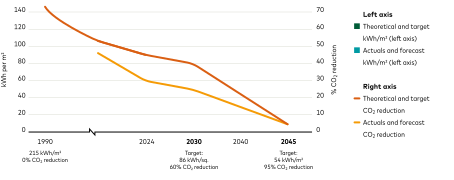
This graph incorporates realised data until 2024. The years 2025-2030 are forecast emissions.
The graph includes realised data up to 2024. Since the full dataset for 2025 is not yet available, we have used forecast data for that reporting period. We calculated the forecast emissions for 2030 by deducting the impact of the planned sustainability actions up to 2030. Additionally, we used linear interpolation between the actual emission levels of 2024 and 2030 to estimate the emission values for the intervening years.
Our long-term target since 2016 has been to upgrade DEFG energy labels to green energy labels, as part of our 98% green label goal in 2024. As per end of 2024 we achieved our target of 98% green labels. In 2025, Vesteda installed a total of 8,974 solar panels, resulting in a cumulative installed capacity of 21.7 MWp as of year-end 2025. We will now monitor our CO2 roadmap on an annual basis, using up-to-date energy consumption data and carbon emissions data and adjust based on the latest insights.
Our reduction target has been defined at a combined level for scope 1, scope 2 and scope 3 emissions. In this context, scope 1 and scope 2 emissions relate specifically to the energy consumption of the common areas within our real estate portfolio. We have not set separate reduction targets for our own operations, as their scale is very limited in relation to the portfolio and therefore has only a marginal impact on our total emissions profile. To reduce our scope 1 and scope 2 emissions, we continue to implement energy‑efficiency measures, expand the use of renewable energy and phase out natural gas across our assets. In the coming years, we will introduce additional initiatives aimed at further reducing emissions across all scopes and advancing progress towards our overall reduction target. The majority of our GHG emissions originate from our value chain, particularly from the goods and services purchased from suppliers. As a result, supply chain decarbonisation is essential to achieving our target. We will therefore continue to strengthen our engagement with suppliers to drive emissions reductions across the value chain and encourage more sustainable practices throughout our ecosystem. For a full list of decarbonisation levers, see the section E1-3 Actions and resources in relation to climate change policies for climate change mitigation.
E1-5 - Energy consumption and mix
As energy consumption is closely related to the impact Vesteda has on climate change, this disclosure requirement provides more insights into the total energy consumption in absolute values, and Vesteda’s share of renewable energy in its overall energy mix.
Vesteda has contracts for green electricity with Vattenfall, which supplies green electricity to properties owned by Vesteda. The green electricity is purchased through Guarantees of Origin (GvOs), ensuring that the electricity consumed is sourced from renewable energy. For district heating, the origin of energy varies by municipality and this is provided by the respective energy suppliers, such as Eneco for Rotterdam, Vattenfall for Almere, and Ennatuurlijk for Maastricht. A conservative approach is used for district heating and cooling, in which we report as if the energy is from fossil fuel. For further elaboration on the energy conversion methods and limitations, see to the following section on GHG emissions. Our energy consumption is reported in MWh and our GHG emissions are reported in CO2eq.
Electricity consumption is recorded in kWh. Gas consumption is measured in m3 and warmth emissions in GJ. These activity data include, for example, meter readings, invoices, and supplier data. Fuel use of Vesteda’s cars can be entered in litres, kWh or kilometres and is converted to MWh. This decision ensures the accuracy and reliability of emissions calculations at the portfolio level for each complex. Overall, the energy usage is reported in MWh. The measurement and disclosure of our energy consumption helps track our material IROs related to energy consumption. Our measured energy consumption data are processed by the tooling programmes of Scaler and CFP. Further information on these two programmes is given in the following section E1-6 Gross scopes 1, 2, 3 and Total GHG emissions. Considering that Vesteda is involved in real estate activities (section L according to the Commission Delegated Regulation (EU) 2022/1288), we operate in a high climate impact sector (encompassing NACE sections A to H and Section L, as defined in the same regulation). Consequently, Vesteda provides a detailed breakdown of the total energy consumption from fossil sources in the table presented below. Vesteda has included the net revenue as presented in the financial statements to calculate energy intensity.
The total energy consumption in MWh and the breakdown by various categories in connection with our own operations is presented in the table below. Note that the actual energy consumption data does not cover 100% of the Fund’s residential units, but only 82.9%. Since the full data set is not yet available, we use extrapolation for our reporting purposes. This extrapolation is based on the assumption that the consumption patterns of the missing 17.1% are consistent with those of the known 82.9%. The rationale behind this estimation is that the properties for which data is not yet available are similar in type, usage, and energy profile to those already reported. By applying a proportional scaling method, we ensure that the final figures reflect a reasonable and balanced estimate of total energy usage across the entire portfolio. In applying this method, we have opted for a slightly conservative estimate within the range of an accurate extrapolation. As a result, the actual energy consumption figures are typically somewhat more favourable (lower) than the extrapolated values presented.
We note that the same extrapolation logic described above was also applied to the figures published in the FY24 annual report. At that time, a number of data components were not yet available or had not been finalised, requiring us to rely on estimation techniques. These included:
-
Incomplete energy consumption datasets for a portion of the residential units; and
-
Outdated or interim conversion factors from grid operators.
Given these limitations, the FY24 figures in the annual report were necessarily extrapolated based on the best information reasonably available at that moment. However, one year later, the underlying uncertainties have largely been resolved. Grid operators have updated and published revised conversion factors, and the remaining missing consumption data for 2024 has been provided throughout the past year. As a result, the estimation elements that previously existed have now been lifted, allowing us to present the most accurate and complete 2024 energy consumption figures available. For this reason, the 2024 figures presented in this report do not fully align with the extrapolated figures published in Vesteda's FY24 annual report. This deviation reflects a normal and expected consequence of moving from a partially estimated dataset to a fully actualised dataset. As such, the difference is treated as a change in estimates, not as an error. We consider the current figures to represent a more robust and reliable basis for disclosure.
Energy consumption and mix
|
Unit |
Base year |
2024 |
2025 |
Delta 2025-2024 |
||
|
(1) |
Fuel consumption from coal and coal products |
MWh |
- |
0 |
- |
|
|
(2) |
Fuel consumption from crude oil and petroleum products |
MWh |
946 |
551 |
282 |
-49% |
|
(3) |
Fuel consumption from natural gas |
MWh |
1,154 |
793 |
650 |
-18% |
|
(4) |
Fuel consumption from other fossil sources |
MWh |
- |
- |
- |
|
|
(5) |
Consumption of purchased or acquired electricity, heat, steam, and cooling from fossil sources |
MWh |
225 |
41 |
46 |
13% |
|
(6) |
Total fossil energy consumption (calculated as the sum of lines 1 to 5) |
MWh |
2,325 |
1,385 |
978 |
-29% |
|
Share of fossil sources in total energy consumption |
% |
16 |
11 |
10 |
||
|
(7) |
Consumption from nuclear sources |
MWh |
- |
- |
- |
|
|
Share of consumption from nuclear sources in total energy consumption |
% |
- |
- |
- |
||
|
(8) |
Fuel consumption for renewable sources, including biomass (also comprising industrial and municipal waste of biologic origin, biogas, renewable hydrogen, etc.) |
MWh |
- |
- |
- |
|
|
(9) |
Consumption of purchased or acquired electricity, heat, steam, and cooling from renewable sources |
MWh |
11,842 |
10,385 |
8,036 |
-23% |
|
(10) |
The consumption of self-generated non-fuel renewable energy |
MWh |
387 |
492 |
632 |
29% |
|
(11) |
Total renewable energy consumption (calculated as the sum of lines 8 to 10) |
MWh |
12,230 |
10,876 |
8,668 |
-20% |
|
Share of renewable sources in total energy consumption |
% |
84 |
89 |
90 |
||
|
Total energy consumption (calculated as the sum of lines 6, and 11) |
MWh |
14,554 |
12,261 |
9,646 |
-21% |
|
|
Energy intensity (total energy consumption per net revenue) |
MWh/M€ |
56 |
42 |
31 |
-28% |
|
|
Total renewable energy production |
MWh |
3,702 |
12,493 |
19,819 |
59% |
|
Note: the disclosed emission data covers 100% of our total emissions by extrapolating the available data for 2025, which represents 82.9% of our real estate portfolio emissions according to Scaler, alongside 100% of our emissions from CFP (no extrapolation needed for CFP data).
E1-6 – Gross scopes 1, 2, 3 and Total GHG emissions
Vesteda acknowledges its own impact on climate change and is committed to addressing this issue. The future temperature rise driven by climate change can result in extreme weather events, rising sea levels, and shifts in weather patterns, which may affect agriculture, water resources, biodiversity, and infrastructure. In the period to 2030, our primary focus will be on reducing energy consumption, as this will naturally lead to a reduction in GHG emissions, helping us achieve our 2030 targets. Beyond 2030, we will continue to decrease the energy demand of our real estate. Our targets are part of our CO2 roadmap and have been integrated in our investment programme. We actively monitor the total energy consumption and CO₂ emissions of all our assets, using these metrics to support strategic decision-making. Based on this data, we identify which assets require mitigation measures. Each of our assets undergoes an internal review every three years. If energy consumption exceeds our threshold, measures are planned to reduce future energy consumption. Depending on the asset, this may lead to improving the sustainability of the building via upgrades or full renovations. For each complex undergoing natural replacement or scheduled maintenance, we evaluate potential sustainability measures and their impact on the building’s overall performance.
Reporting methodologies and assumptions of GHG emissions
Vesteda’s energy consumption and greenhouse gas inventory are based on the ESRS. When referring to emissions, it is important to distinguish between CO2 (carbon dioxide) and CO2eq (carbon dioxide equivalent). CO2 refers specifically to emissions of carbon dioxide, a major greenhouse gas produced primarily from burning fossil fuels. However, many other greenhouse gases, such as methane (CH4) and nitrous oxide (N2O), also contribute to climate change. To simplify reporting and analysis, these other gases are converted into CO2 equivalents (CO2eq) based on their global warming potential (GWP). Using CO2eq enables us to express the impact of all greenhouse gases in a single, comparable metric. Vesteda applies CO2eq conversion factors. Throughout this document Vesteda reports its greenhouse gas emissions (GHG) as CO2eq.
Vesteda’s reporting includes all three types of GHG emissions:
-
Scope 1: direct GHG emissions originating from Vesteda’s own operations;
-
Scope 2: indirect GHG emissions resulting from the generation of purchased electricity and heat used by Vesteda, calculated using emission factors;
-
Scope 3: indirect emissions by Vesteda’s value chain.
In line with Vesteda’s reporting principles and commitment to providing clear, consistent, and comparable information, we have chosen to report the GHG emissions of investment properties under Scope 3 using the operational control approach. We consider this method to best reflect the relationship between Vesteda as a real estate investor and the associated GHG emissions, and to provide the most consistent and comparable information. If the ESRS requirements were applied strictly, both the financial control and operational control approaches would need to be used. This would result in GHG emissions from Vesteda’s value chain being reclassified from Scope 3 category 13 (Downstream leased assets), to Scope 1 and 2, along with additional disclosures to address inconsistencies. Attributing these emissions to Scope 1 and 2 would imply that Vesteda has direct control over these emissions. However, this is not the case, as these emissions are directly consumed by our tenants.
Vesteda uses two methods to quantify Scope 2 emissions. The location-based method quantifies Scope 2 GHG emissions based on average electricity grid emission factors for defined locations (e.g., the Netherlands). The market-based method quantifies Scope 2 GHG emissions based on GHG emissions emitted by the generators from which Vesteda contractually purchases electricity bundled with instruments, or unbundled instruments on their own. Vesteda sources its electricity for operations through a bundled agreement with the green electricity supplier Engie with Guarantees of Origin (‘Garanties van Oorsprong’). The percentage of green electricity associated with Vesteda’s operations is currently determined for 100% by bundled contractual agreements. This is used for the computation of the GHG emissions according to the market-based method. There are no significant changes in the definition of what constitutes Vesteda’s upstream and downstream value chain.
The Scope 3 emissions data is based on ESRS and includes several different data sources, methods, and assumptions. Eight out of the fifteen categories are considered not applicable and/or not material for Vesteda, for the following reasons:
3. Fuel- and energy-related activities: This category concerns emissions related to the production and transportation of energy, such as fixed charges and transport. Since these activities are already included in the scope 1 and scope 2 reporting (office consumption and colleague transport), Vesteda has decided not to report these emissions in this category once again in order to avoid duplication;
4. Upstream Transportation and Distribution: For categories 1 and 2 of scope 3, we use the cradle-to-gate approach. This means that all the consumption of our suppliers is already included in these categories 3.1 and 3.2;
8. Upstream leased Assets: Emissions from our upstream leased assets, such as offices, are already included in scope 2;
9. Downstream Transportation and Distribution: Vesteda does not sell products that can be transported;
10. Processing of Sold Products: All products are sold in final form, with no further processing required. Hence, we do not sell or rent products that are processed and transported;
12. End-of-Life Treatment of Sold Products: Vesteda does not have any end-of-life buildings. This might be relevant for the renovations of bathrooms and kitchens, but these are already accounted for;
14. Franchises: Vesteda does not operate a franchising business model;
15. Investments: Vesteda does not have investments that are relevant for this scope 3 category.
As such, a total of seven categories within the Scope 3 are assessed as applicable. The methodology, data sources and key assumption and limitations of these seven categories for which the Scope 3 emissions are estimated are listed below:
1. Purchased goods and services: For category one purchased goods and services, we use the supplier-specific data method, in which all data is specifically derived from the supplier’s products. Vesteda has prioritised gathering direct emissions data from our suppliers over relying on other methodologies, such as the spend-based method. We are actively investigating the emissions associated with the raw materials used from our Tier 1 suppliers (cradle-to-gate);
2. Capital goods: For this category, Vesteda uses the supplier-specific data method. Given the similarities with category 1 'Purchased goods and services', no data is yet included. Additionally, we are conducting a comprehensive study on lifecycle emissions, focusing in particular on new constructions and near-zero energy buildings. This research aims to gain insights into emissions from capital goods and material processing (cradle-to-gate). Once these emissions are thoroughly understood, Vesteda plans to establish specific targets and actions to effectively address and reduce these material-bound emissions (cradle-to-gate);
5. Waste generated in operations: Vesteda's waste generation methodology involves using emission factors from CE Delft's report on the climate impact of waste processing routes in the Netherlands. Waste data is collected from various sources, including quarterly reports from waste collectors such as Milieu Service Nederland. CO2eq emissions are calculated by multiplying the amount of waste by the corresponding emission factors;
6. Business travel: Vesteda's business travel methodology involves using externally sourced emission factors, an initiative by several Dutch organisations and the government. These emission factors are updated annually to reflect the most recent figures. Data for business travel is collected from various sources, including the Director HR, who provides annual figures for commuting and business travel kilometres. The total CO2eq emissions from business travel are calculated by multiplying the distance travelled (in kilometres) by the corresponding emission factors for different modes of transport, such as buses, trams, metros, and flights. However, there are limitations to this methodology. The emission factors for different modes of transport may vary and are subject to updates, which can affect the accuracy of the calculations. Additionally, the reliability of the data depends on the accuracy and consistency of those entering their usage into the system; this forms the basis of the internal data collection process. Any errors or inconsistencies in the data provided by these sources can impact the accuracy of the CO2eq calculations;
7. Employee commuting: Vesteda uses externally sourced emission factors. These emission factors are updated annually to reflect the most recent figures. This data is also collected from the Director HR, who provides annual figures for kilometres travelled by personal cars. The total CO2eq emissions from employee commuting are calculated by multiplying the distance travelled (in kilometres) by the corresponding emission factors for cars. The same limitations apply as for category 6;
11. Use of Sold Products: To compute the emissions from the use of our sold products, Vesteda makes use of the heating system as the primary source of building-related emissions. These emissions are projected over the expected lifespan of the installation. We assume a maximum lifespan of 20 years for boilers and combined heat and power (CHP) systems. If the age of the heat source installation is unknown, we use the home’s construction year as a proxy; in the event this exceeds the 20 years lifespan, we assume a remaining useful life of five years. The expected lifespan is multiplied by the actual energy consumption of the heating system. The resulting values are then converted into CO2 emissions using the emission conversion factors;
13. Downstream leased assets: The measurement of Vesteda’s tenants' emissions involves using CRREM's location-based emission factors, as performed by Scaler. The data gathering process includes collecting information on the emissions from our tenants. The total CO2eq emissions are calculated by multiplying the activity data (e.g., energy consumption) by the location-based emission factors provided by CRREM. However, there are limitations to this methodology. Additionally, the reliability of the data depends on the sources, such as the lessors and internal data collection processes. Any errors or inconsistencies in the data provided by these sources can impact the accuracy of the CO2eq calculations.
Vesteda has partnerships with both CFP Green buildings and Scaler for the monitoring of our emission data. For the emissions of our own operations, we collaborate with CFP Green buildings. The emissions collected by CFP are mainly focused on Vesteda’s scope 1 and scope 2 emissions. In addition, CFP measures a number of indirect scope 3 emissions related to our own operations, such as waste, business travel and employee commuting. CFP Green buildings calculates CO2eq emissions using externally sourced emission factors. The website provides reliable and annually updated CO2eq emission factors for the Dutch market to ensure accurate conversion factors.
Scaler is a data management platform in which we store our yearly consumption data at the portfolio level, and which processes this data for reporting purposes. This data includes the downstream emissions of our tenants, i.e. Scope 3, category 13 'Downstream leased assets'. These emissions from our tenants constitute the largest share of our total emission data, but we face challenges in terms of measuring these data. This is because our tenants purchase their own energy. Scaler incorporates the location-based emission factors from the Carbon Risk Real Estate Monitor (CRREM). CRREM offers a complete and cohesive data set with emission factor projections, which is publicly available. In Scaler, Scope 3 emission calculations and analyses encompass emissions specifically related to tenant energy consumption, including specific energy subcategories, such as off-site electricity or natural gas. The CRREM emission factors are updated periodically and the calculations are in line with INREV guidelines. Measuring GHG emissions is only possible when we know the energy consumption of our real estate portfolio. However, not all data is available on the energy consumption of the entire portfolio, which is exported from Scaler and covers 82.9% of our total energy consumption without extrapolation. The rationale for extrapolating the emissions data to 100% coverage is described in the previous section E1-5 Energy consumption and mix.
The data collected by CFP and Scaler are identified and discussed with Vesteda. By following these methodologies and assumptions, Vesteda aims to provide a transparent and accurate representation of its Scope 3 greenhouse gas emissions, while acknowledging the limitations and challenges associated with the estimation process.
The table on the next page shows our GHG emissions per emission scope. Biogenic emissions from combustion or biodegradation that occur in the value chain are presented in the table below.
The table also presents our reduction target expressed in kWh per m². As previously outlined, this target applies solely to our real estate portfolio, reflecting the materiality and relative scale of its energy consumption and associated emissions. Due to the very limited size of our own operations compared with the portfolio, these are not included in the scope of our reduction target. For completeness and transparency, the table does include the energy data and related scope 1 and scope 2 emissions from our own operations collected from CFP. However, the impact of these activities on our overall emissions profile is minimal, and they therefore have a negligible influence on the achievement of our portfolio‑level reduction target.
Gross scope 1, 2, 3 and Total GHG emissions
|
Base year |
Delta |
Target |
Annual % target/Base year |
||||||||
|
Unit |
1990 |
2021 |
2024 |
2025 |
2025-2024 |
2030 |
2045 |
2050 |
|||
|
Scope 1 GHG emissions* |
|||||||||||
|
Gross Scope 1 GHG emissions |
tCO₂eq |
518 |
341 |
223 |
-35% |
||||||
|
Scope 2 GHG emissions** |
|||||||||||
|
Gross location-based Scope 2 GHG emissions |
tCO₂eq |
4,211 |
3,101 |
2,178 |
-30% |
||||||
|
Gross market-based Scope 2 GHG emissions |
tCO₂eq |
1,350 |
1,068 |
763 |
-29% |
||||||
|
Significant Scope 3 GHG emissions*** |
|||||||||||
|
Total gross indirect (Scope 3) GHG emissions |
tCO₂eq |
78,333 |
62,021 |
62,008 |
0% |
||||||
|
1. |
Purchased goods and services |
3.1 and 3.2 are currently excluded from the inventory due to the lack of actual data. We have prioritized gathering direct emissions data from our suppliers over relying on spend-based estimations. This data collection process is ongoing, and we anticipate being able to report detailed supplier-level emissions starting in FY2026. |
|||||||||
|
2. |
Capital goods |
||||||||||
|
5. |
Waste generated in operations |
tCO₂eq |
6 |
7 |
5 |
-31% |
|||||
|
6. |
Business traveling |
tCO₂eq |
7 |
16 |
15 |
-4% |
|||||
|
7. |
Employee commuting |
tCO₂eq |
24 |
16 |
21 |
31% |
|||||
|
11. |
Use of sold products |
tCO₂eq |
1,125 |
3,752 |
4,815 |
28% |
|||||
|
13. |
Downstream leased assets |
tCO₂eq |
77,172 |
58,230 |
57,151 |
-2% |
|||||
|
Total GHG emissions |
|||||||||||
|
Total GHG emissions (location-based) |
tCO₂eq |
75,968 |
83,062 |
65,463 |
64,409 |
-2% |
|||||
|
Total GHG emissions (market-based) |
tCO₂eq |
75,968 |
80,201 |
63,430 |
62,994 |
-1% |
|||||
|
Total GHG emissions on revenue intensity |
|||||||||||
|
Total CO2 emissions intensity (location-based) |
tCO₂eq per € million net revenu |
319 |
226 |
205 |
-9% |
||||||
|
Total CO2 emissions intensity (market-based) |
tCO₂eq per € million net revenu |
308 |
219 |
201 |
-8% |
||||||
|
Total kWh per square metre |
215 |
113 |
89 |
89 |
86 |
54 |
Net Zero |
-2% |
|||
Note: our emission data disclosed covers 100% of our total emissions by extrapolating the available data, which represents 82.9% of our real estate portfolio emissions according to Scaler, alongside 100% of our emissions from CFP (no extrapolation needed for CFP data).
E1-7 – GHG removals and GHG mitigation projects financed through carbon credits
Vesteda does not make use of carbon credits to mitigate its greenhouse gas (GHG) emissions. Instead, Vesteda focuses on direct measures to reduce its carbon footprint, such as improving energy efficiency, increasing the use of renewable energy sources, and implementing sustainable practices across its operations.
E1-8 - Internal carbon pricing
As with the carbon credits described in the previous section, Vesteda does not make use of internal carbon pricing methods, as Vesteda focuses on direct measures to reduce its carbon footprint. Therefore this section is deemed not applicable for Vesteda.
E1-9 - Anticipated financial effects from material physical and transition risks and potential climate-related opportunities
The ESRS allows companies to provide only qualitative disclosures on the financial effects of physical climate risks and transition risks for the first three years of preparing a Sustainability Statement. Currently, quantifying these transition risks is challenging because existing regulations primarily focus on improving energy labels, which is too narrow in scope. For older homes, meeting these enhanced energy label requirements is often impractical, making it difficult to accurately assess the financial impact. Hence, Vesteda currently relies on a qualitative assessment of the financial effects of these transition risks.
This analysis relates specifically to Vesteda’s residential real estate portfolio. Given the very limited scale of our own operations relative to the portfolio, and their correspondingly immaterial contribution to our overall risk exposure, these are not included in the assessment. As a result, the analysis focuses solely on portfolio‑level physical and transition risks.
Climate transition risk
For our transition risk assessment, Vesteda used various time horizons within the IEA Net Zero 2050 scenario: short-term (<1 year), medium-term (1-5 years), long-term (5-10 years), and very long-term (10-25 years). According to our results, the long-term horizon (5-10 years) is the most significant period, as this shows the highest transition risk scores. During this time, transition risk scores peak due to the substantial changes required to align with net-zero goals. This period will see increased challenges due to stricter regulations, the need for innovation, and fluctuating market dynamics. These factors will require significant investments and operational changes to mitigate existing financial risks and prevent asset devaluation. By the very long-term horizon, beyond 10 years, these risks may stabilise as systems and frameworks for achieving net-zero goals are established, reducing uncertainties.
Vesteda has identified four material climate transition risks that collectively impact the financial structure of the organisation. These include: the pricing of GHG emissions, the transition to lower emission sources and activities, the pricing of production processes and the need to invest in new technologies. The enforcement of lower emissions through sustainability policies and standards will impact the entire value chain, from cement and building materials companies to property management and tenants. Additionally, market changes may further elevate production costs alongside these sustainability and low-carbon policies.
Capital Expenditure (CapEx): Sustainability policies and decarbonisation targets require significant capital investments across the construction and real estate sectors. Suppliers must adapt production methods and invest in research and development to meet climate objectives. These changes are expected to increase supply chain costs, which may be passed on to Vesteda through higher material prices. Additionally, Vesteda will need to invest in more sustainable building materials and energy-efficiency standards to comply with evolving regulations and standards. Investments in technologies such as heat pumps, solar panels, and other energy-saving solutions are essential to remain competitive. While these investments may reduce long-term operating costs, they require upfront capital expenditures as a result of these necessary adjustments.
Operating Expenditure (OpEx): Rising production and renovation costs, driven by sustainability policies are expected to elevate both CapEx and OpEx. Smaller renovation projects, such as minor repairs, will increase operational expenditures (OpEx), while major renovations will be classified under capital expenditures (CapEx). Real estate management may face higher energy prices and increased costs for building materials. The implementation and maintenance of new technologies will also raise operational costs in the short term. However, these investments have the potential to reduce energy consumption and lower OpEx over time. Vulnerable properties that do not make a rapid switch to net zero, may experience higher insurance premiums and electricity costs. Tenants may also face increased costs due to higher energy prices, which will affect their purchasing power and may impact their ability to afford rent.
Volatility: Investments in new technologies create volatility in both capital and operational costs. As we adopt and integrate new technologies, there may be fluctuations in operational efficiency and maintenance requirements. For example, the initial phase of implementing sustainable heat sources or installing solar panels may lead to unexpected operational challenges and higher maintenance costs. Additionally, the rapid pace of technological advancements can result in frequent updates and replacements, contributing to cost variability. This volatility can impact the predictability of both our capital and operating expenditures. Furthermore, energy price volatility may decline as a result of our ability to generate our own electricity through solar panels. Vesteda must remain agile in its budgeting and scenario planning to manage these fluctuations effectively.
Physical climate risk
In the context of Vesteda's real estate management, the following six physical climate risks have been determined to be material: flooding, wildfires, rising groundwater, falling groundwater levels, flooding from extreme rainfall and heat stress.
Climate risks and impact on Vesteda’s portfolio 2025
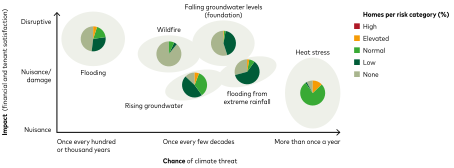
In the medium term, these problems will worsen and inflict increasing levels of damage on Vesteda's assets. In the long term, in line with the chosen KNMI’14 2050 WH scenario, the consequences will be even more severe, potentially causing irreparable damage to buildings and incurring significantly higher costs for repair and adaptation. The chosen scenario, KNMI’14 2050 WH[1], represents the worst-case climate scenario for the year 2050, indicating the upper end of the range of expectations for most climate effects, including significant increases in temperature and extreme weather events. To assess the impact, Vesteda compares the current and long-term scenario.
Each of these risks carries distinct financial implications that can affect both capital expenditures (CapEx), operational expenditures (OpEx) and other parts of our business. Determining the exact financial implications however remains a complex challenge. We have assessed the potential financial implications in a qualitative manner to gain a better understanding of the risks and how to respond to them. We have currently only performed a qualitative assessment but will perform a quantitative analysis in the future.
Flooding
Flooding presents a substantial risk to Vesteda's properties, particularly those located in areas with heightened vulnerability to water intrusion and structural exposure. The financial implications could include the need for significant capital investments in strengthening foundations, constructing waterproof basements or costly repairs for water damage to buildings and infrastructure. Additionally, operational costs could rise due to the necessity of regular maintenance and inspection of water drainage systems. Most prevalent for flooding is the potential significant increase in the insurance premiums for our buildings. Especially as the chance of flooding increases over the coming decades due to rising water levels, and for buildings subject to frequent flooding. Furthermore, flooding can have a negative impact on the value of a property, which impacts revenue over time.
Rising groundwater
Rising groundwater levels can damage building foundations, especially those made of wood, by increasing moisture content which leads to swelling, warping, rot, and structural instability. This will necessitate capital expenditures for foundation adjustments and the installation of groundwater management systems. Operationally, there will be ongoing costs associated with monitoring and maintaining these systems, as well as addressing moisture issues within buildings. The potential financial burden includes reinforcing foundations to prevent subsidence and addressing moisture problems in basements and lower floors.
Falling groundwater
Falling groundwater levels will pose a risk to the stability of building foundations. This is because the reduction in groundwater can lead to soil shrinkage and subsidence, causing the foundation to settle unevenly and potentially crack, and it can also expose wooden piles to air, leading to pile rot and further compromising the foundation's integrity. This will require capital investments in strengthening or replacing vulnerable foundations and installing irrigation systems to stabilise groundwater levels. Operational costs will include regular maintenance of these irrigation systems and the inspection and repair of foundations. Financially, this translates to expenses for repairing cracks and subsidence in buildings and investing in technologies to monitor and manage groundwater levels.
Wildfires
Wildfires represent a risk, particularly for properties located near forested areas. The financial impact includes additional capital expenditures for installing fire-resistant materials and systems, as well as creating firebreaks and other preventive measures for buildings at risk. Operationally, there will be ongoing costs for maintaining fire-resistant systems and materials. The financial consequences include the costs of repairing fire damage to buildings and infrastructure and increased insurance premiums for fire damage.
Flooding from extreme rainfall
Flooding from rainfall can lead to water infiltration and damage to buildings, necessitating capital investments in adapting roof and façade systems to prevent water ingress and installing rainwater harvesting and drainage systems. Operational costs will rise due to the need for regular maintenance and inspection of these systems and to address water damage. Financially, this includes repairing damage caused by water infiltration and restoring landscaping and infrastructure after heavy rainfall.
Heat stress
Heat stress is another critical risk, particularly during periods of extreme heat. The financial implications could include capital expenditures for installing air conditioning systems and sunshades and adapting buildings to make them more heat-resistant. For new-build constructions, from 2021 onwards, there are requirements listed in the Dutch Building decree (Bouwbesluit) regarding the prevention of high temperatures inside homes. This could potentially require higher capital expenditures when acquiring buildings. Operating costs could increase due to higher energy consumption for cooling and the maintenance of air conditioning systems and other cooling installations. Financially, this translates to expenses for improving insulation and ventilation in buildings and higher energy bills during heatwaves, which could have a negative impact on tenant satisfaction and undermine the value of our properties. Furthermore, failing to properly address heat stress could have a negative impact on Vesteda’s revenue, as tenants who suffer from serious heat stress for more than 300 hours a year are entitled to compensation. This could become one of the most prevalent risks, as temperatures rise in the coming decades, especially in inner cities. Although heat stress impact is described as merely a nuisance, its frequency is indicated to have the greatest chance of occurring. Additionally, it is the risk with the highest proportion of elevated home exposure.
Opportunities
Despite the challenges posed by these physical climate risks, there are opportunities for Vesteda to enhance the resilience and sustainability of its properties. For instance, implementing rainwater harvesting systems and green roofs can mitigate flooding risks, while also providing environmental benefits. Additionally, adopting fire-resistant materials and creating defensible spaces can protect properties from wildfires and reduce insurance premiums. Proactively addressing heat stress by installing energy-efficient cooling systems and improving building insulation can enhance tenant satisfaction and reduce energy consumption. Furthermore, by investing in advanced monitoring and management systems for groundwater levels, Vesteda can prevent damage from both rising and falling groundwater, ensuring the stability and longevity of its properties. These measures not only safeguard Vesteda's assets but also align with broader sustainability goals, potentially attracting environmentally conscious tenants and investors, thereby enhancing the company's market position and long-term profitability.